
Travel has changed fast in recent years. People now depend on smartphones for flights, hotel bookings, banking alerts, maps, emergency help, and travel updates. That is why understanding the right way to manage a travel tweaks phone number setup is more important than ever. Many travelers focus on passports, luggage, and tickets but forget one critical detail. Their phone system may not work properly once they leave the country. A small communication issue can quickly turn a smooth trip into a stressful experience.
This guide explains how travelers can prepare their phones before a trip, avoid common communication mistakes, reduce roaming costs, and stay secure while traveling. It also covers best practices for individual travelers and technical teams that manage travel communication systems.
What Is a Travel Tweaks Phone Number Setup?
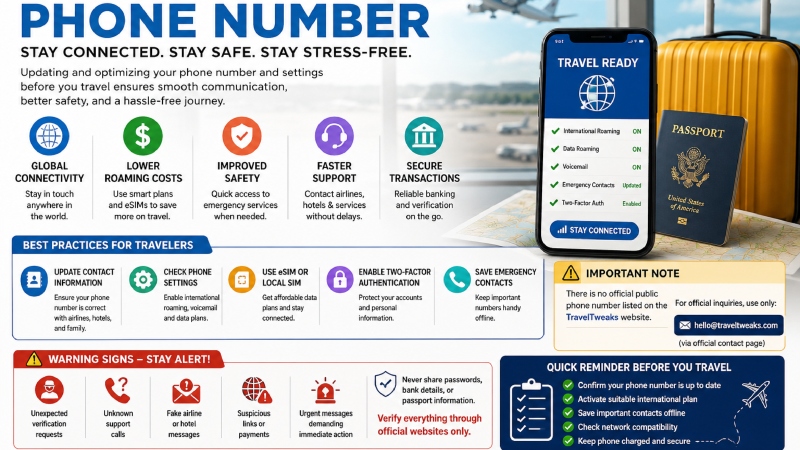
A travel tweaks phone number strategy means preparing your mobile communication system for domestic or international travel. It includes updating contact information, enabling international access, protecting sensitive data, and ensuring stable communication during the trip.
This process may involve:
Updating emergency contact details.
Activating international calling plans.
Using dual SIM technology.
Setting up eSIM profiles.
Protecting banking verification access.
Testing communication apps before departure.
Creating backup contact options.
Travelers who prepare early often avoid the biggest communication problems abroad.
Why Phone Preparation Matters Before Traveling
Modern travel depends heavily on digital access. Airlines send gate changes through SMS alerts. Banks use mobile verification codes for payments. Hotels contact guests about reservations and airport pickups.
If your number does not work correctly, several problems may happen:
| Travel Issue | Possible Result |
|---|---|
| Inactive phone number | Missed airline updates |
| Weak security setup | Fraud risks |
| Expensive roaming plan | High phone bills |
| No backup communication | Delayed emergency support |
| Incorrect contact details | Hotel or booking confusion |
A reliable travel communication setup helps reduce stress and improves travel safety.
Common Problems Travelers Face
Missed Flight Notifications
Airlines often send important messages shortly before departure. Travelers who fail to prepare their phones may miss:
Gate changes.
Schedule updates.
Cancellation notices.
Boarding reminders.
One missed message can create major delays.
Banking Verification Problems
Banks usually require SMS verification when travelers log into accounts abroad. If the phone number is unavailable, travelers may lose access to:
Online banking.
Credit card verification.
Fraud alerts.
International payment approval.
This becomes especially frustrating during emergencies.
Expensive International Charges
Many travelers return home with unexpected roaming bills. Some apps continue using mobile data in the background even when travelers are not actively using their phones. Without proper planning, costs increase quickly.
Weak Mobile Security
Public Wi-Fi networks at airports, hotels, and cafes can expose personal information. Travelers who ignore mobile security may face identity theft or account breaches.
Best Practices for Individual Travelers
Individual travelers should keep phone preparation simple, secure, and practical.
Update Emergency Contacts
Before leaving, review all important contacts. Make sure family members, insurance providers, and emergency numbers are current. Store backup copies both digitally and on paper.
Enable International Support
Contact your mobile provider before travel. Confirm:
International roaming availability.
Pricing details.
Data limitations.
Supported countries.
This helps avoid unexpected costs.
Use Wi-Fi Calling Carefully
Wi-Fi calling can reduce roaming charges significantly. However, travelers should only connect through trusted and secure networks. Avoid entering sensitive passwords on public Wi-Fi.
Install Secure Communication Apps
Modern communication apps offer safer and cheaper international messaging.
Popular options include:
WhatsApp.
Telegram.
Signal.
Google Voice.
These apps help travelers stay connected without relying completely on expensive international calling.
Keep Backup Power Available
A dead battery creates serious communication problems during travel.
Always carry:
A power bank.
A charging cable.
A universal travel adapter.
Reliable battery access improves safety and convenience.
Best Practices for Technical Teams
Technical teams managing travel communication systems must focus on reliability, security, and scalability.
Implement Secure Authentication
Travel-related systems should use:
Two-factor authentication.
Encrypted communication channels.
Device verification.
Secure login monitoring.
This reduces security risks for travelers and organizations.
Monitor International Connectivity
Technical teams should monitor:
Network reliability.
SMS delivery systems.
Roaming performance.
Server response times.
Strong monitoring prevents communication failures.
Maintain Cloud-Based Backup Systems
Cloud backup systems help restore:
Contact lists.
Travel records.
Security settings.
Communication history.
This becomes critical if a traveler loses a device.
Test Communication Platforms Regularly
Travel support systems should be tested frequently to ensure:
Fast message delivery.
Reliable international access.
Stable notification systems.
Minimal downtime.
Consistent testing improves user trust.
How eSIM Technology Improves Travel Communication
eSIM technology is becoming extremely popular among international travelers.
Unlike traditional SIM cards, eSIM systems allow users to activate mobile plans digitally.
Advantages include:
Faster activation.
Lower international costs.
Easy carrier switching.
Better travel flexibility.
Improved convenience.
Many modern smartphones now support eSIM technology.
Pros and Cons of Modern Travel Phone Systems
Pros
Better international communication.
Lower roaming costs.
Improved travel safety.
Faster emergency access.
Reliable banking verification.
Flexible global connectivity.
Cons
Roaming plans may still be expensive.
Public Wi-Fi can create security risks.
Weak preparation causes communication failures.
Battery dependency increases during travel.
Some countries restrict network compatibility.
Warning Signs Travelers Should Never Ignore
Travel communication scams continue increasing worldwide. Travelers should watch for suspicious activity.
Common warning signs include:
Unexpected verification requests.
Unknown travel support calls.
Fake airline messages.
Suspicious booking confirmations.
Links requesting payment information.
Urgent messages demanding immediate action.
If something feels suspicious, verify information through official websites only.
How to Reduce Roaming Costs
Smart planning helps travelers control international phone expenses.
Use Local SIM Cards
Local SIM cards often provide cheaper data and calling rates. They work especially well for long trips.
Limit Background Data Usage
Many applications consume data automatically.
Disable:
Automatic updates.
Cloud syncing.
Background refresh features.
This helps reduce unnecessary charges.
Download Offline Maps
Offline navigation apps reduce mobile data usage while traveling. They also help travelers navigate areas with weak internet connections.
Choose Flexible International Plans
Some mobile carriers offer short-term travel packages with better pricing. Compare plans before departure.
The Future of Travel Communication
Travel communication continues evolving rapidly.
Future systems may include:
AI-powered travel support.
Global satellite messaging.
Advanced biometric verification.
Smart emergency response systems.
Automatic network switching.
Travelers who adapt early will benefit from better security and lower communication costs.
Why Travelers Search for Better Communication Solutions
Search demand for travel-related communication support continues growing because travelers now understand the importance of mobile reliability.
People want:
Safer travel experiences.
Reliable global communication.
Affordable mobile access.
Faster emergency response.
Secure online verification.
Stress-free international connectivity.
Strong preparation helps achieve all these goals.
Frequently Asked Questions
What does travel tweaks phone number mean?
It refers to preparing and optimizing your phone setup for safer and more reliable travel communication.
Why should travelers update phone settings before a trip?
Updated settings help travelers avoid roaming costs, missed alerts, and communication problems abroad.
Is eSIM better for international travel?
eSIM technology offers flexibility, faster activation, and lower costs for many international travelers.
How can travelers improve mobile security?
Travelers should use strong passwords, secure apps, and trusted internet connections while traveling.
What is the safest way to reduce roaming charges?
Using local SIM cards, Wi-Fi calling, and controlled data usage can help reduce international costs.
Conclusion
A strong travel tweaks phone number strategy helps travelers stay connected, secure, and prepared throughout every journey. Good communication planning reduces stress, improves safety, and prevents expensive travel mistakes. Travelers who update their mobile systems before departure often experience smoother trips and faster problem resolution.
Before your next trip, review your phone settings, confirm emergency contacts, secure your accounts, and prepare backup communication options. A few smart adjustments today can protect your travel experience tomorrow.